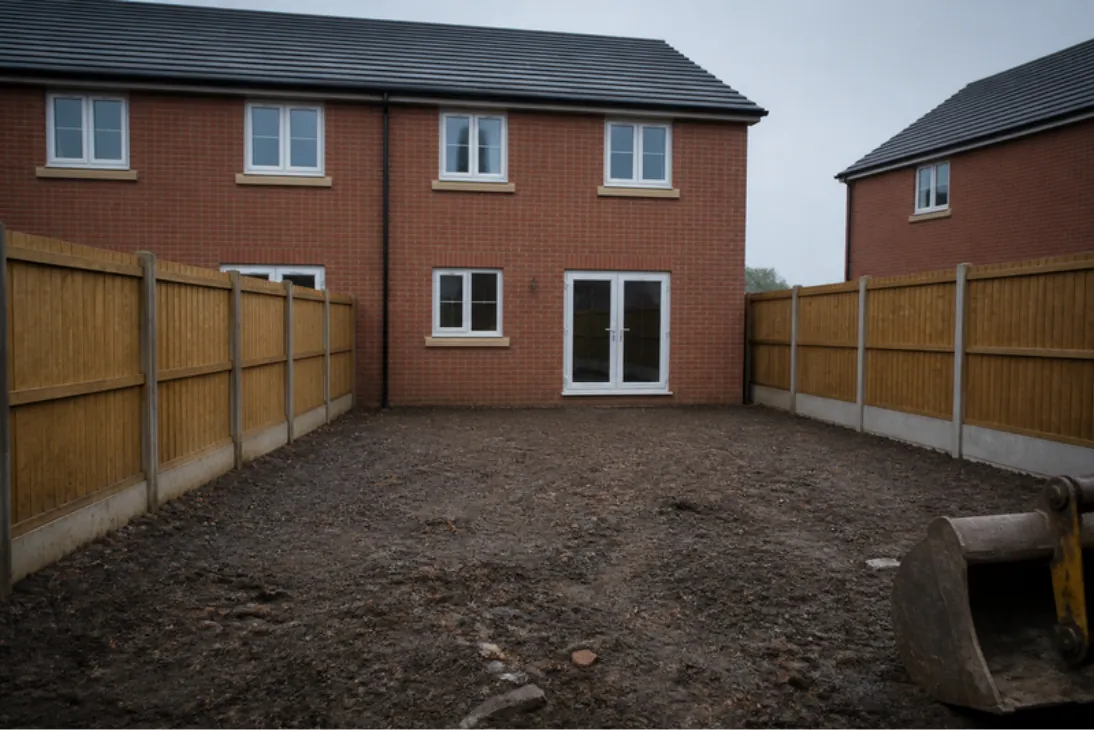
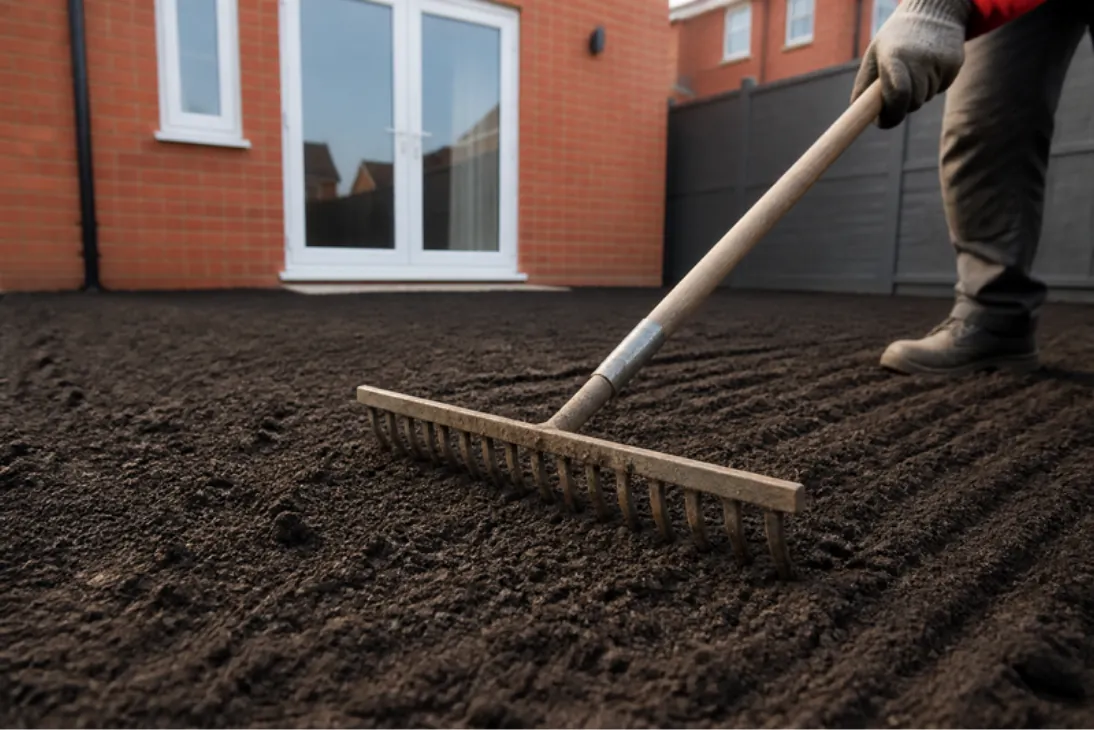
Bare plot
Nothing but soil
The most common one. Usually needs the ground breaking up and some topsoil before turfing.
- Check for drainage issues first
- Topsoil depth worked out on the day
We use cookies to improve your visit.
Essential cookies keep the website and your basket working, so they're always on. Analytics cookies (Google Analytics and Microsoft Clarity) show us which pages people find useful. They stay off unless you turn them on.

For homeowners
Keys in hand, garden still looking like part of the building site? We sort the ground underneath, then lay a lawn that has a fair chance of thriving.
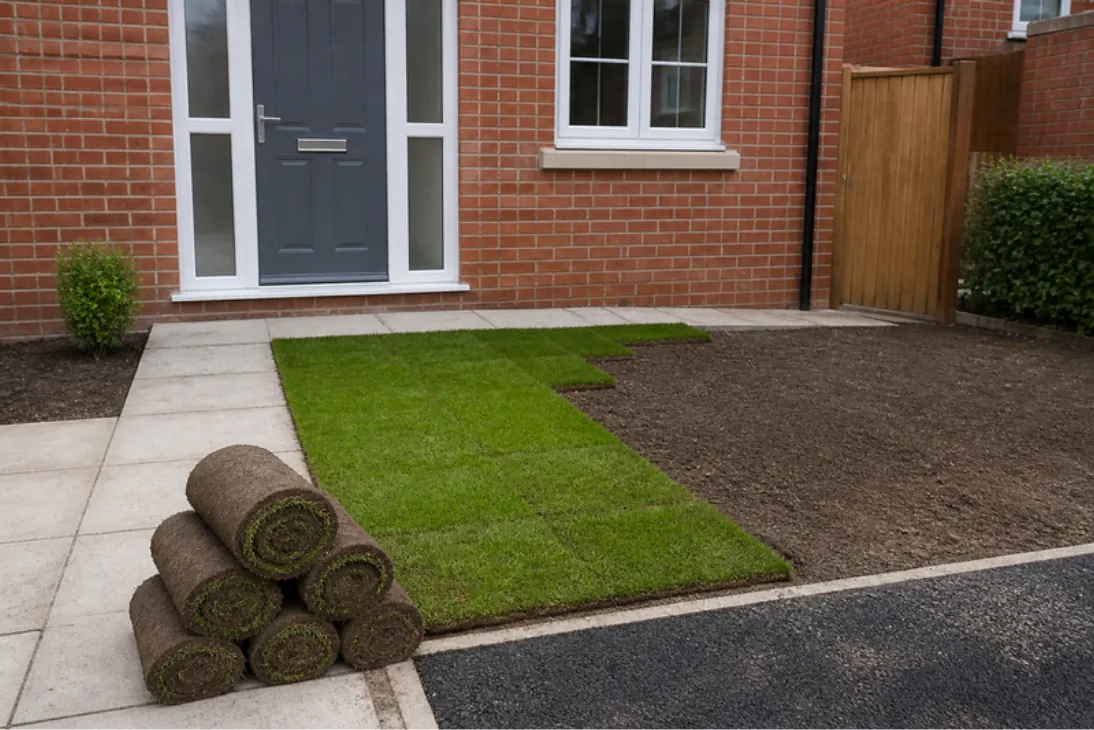
On a lot of estates around Greater Manchester, the natural ground is heavy clay. While the houses go up, it gets driven over by diggers, dumpers and delivery lorries, and bits of brick, block, mortar and packaging end up mixed in.
When the garden is finished, it's often a thin layer of soil spread over that compacted base. Water can't get away, so it sits on top, and grass roots can't get down. That's why preparation matters more than the turf itself.
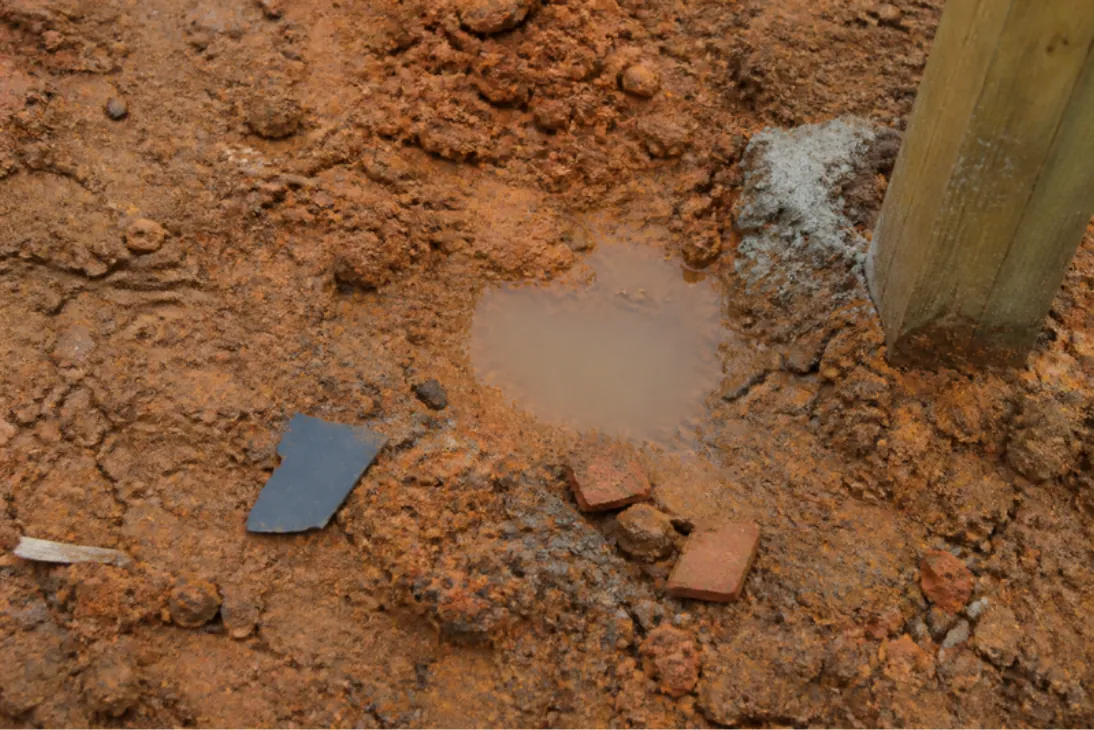
Larger amounts of buried rubble are priced separately and agreed with you before we carry on.
Clay to lawn
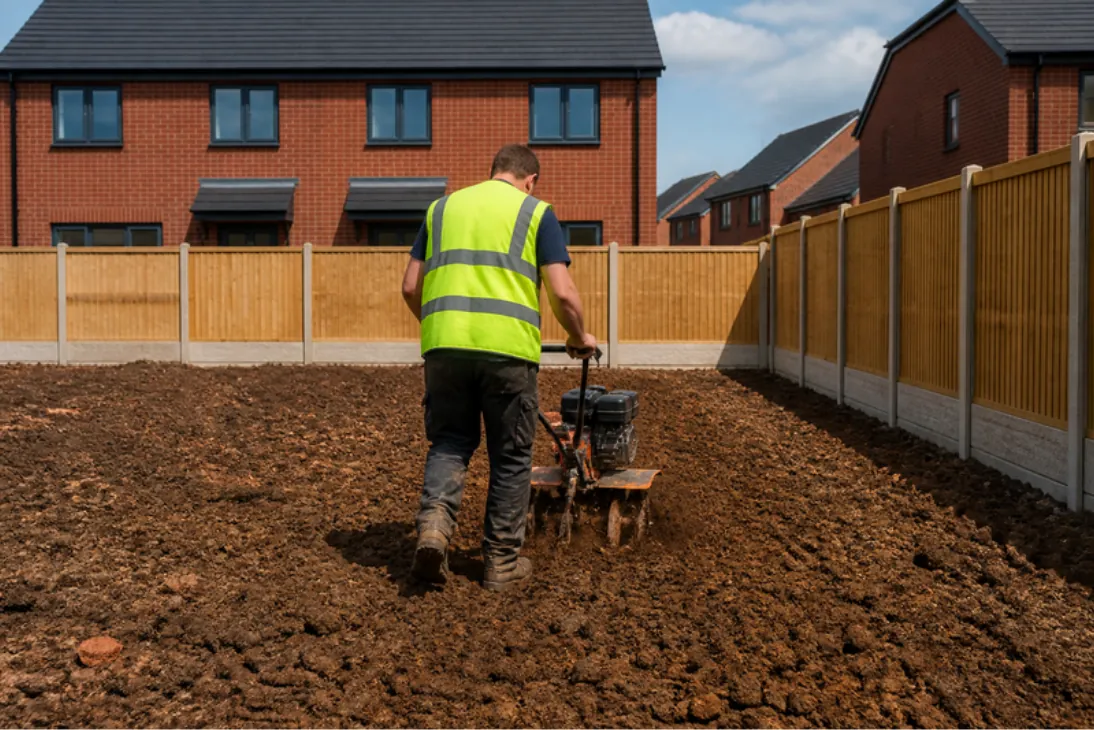
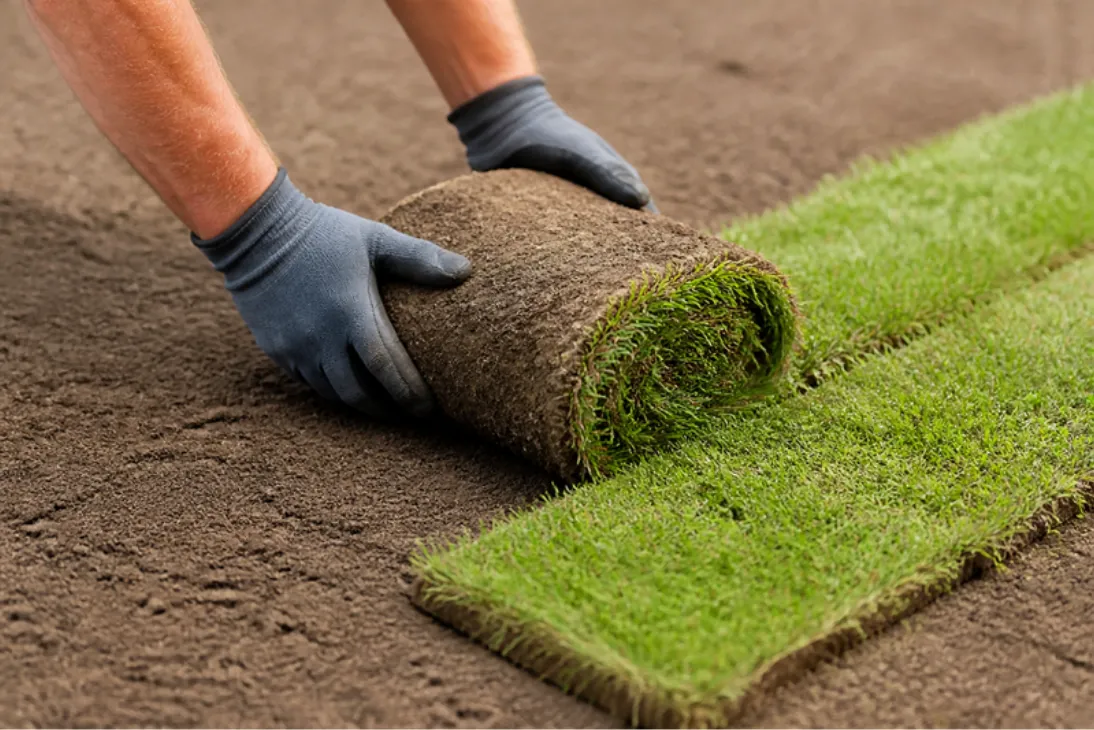
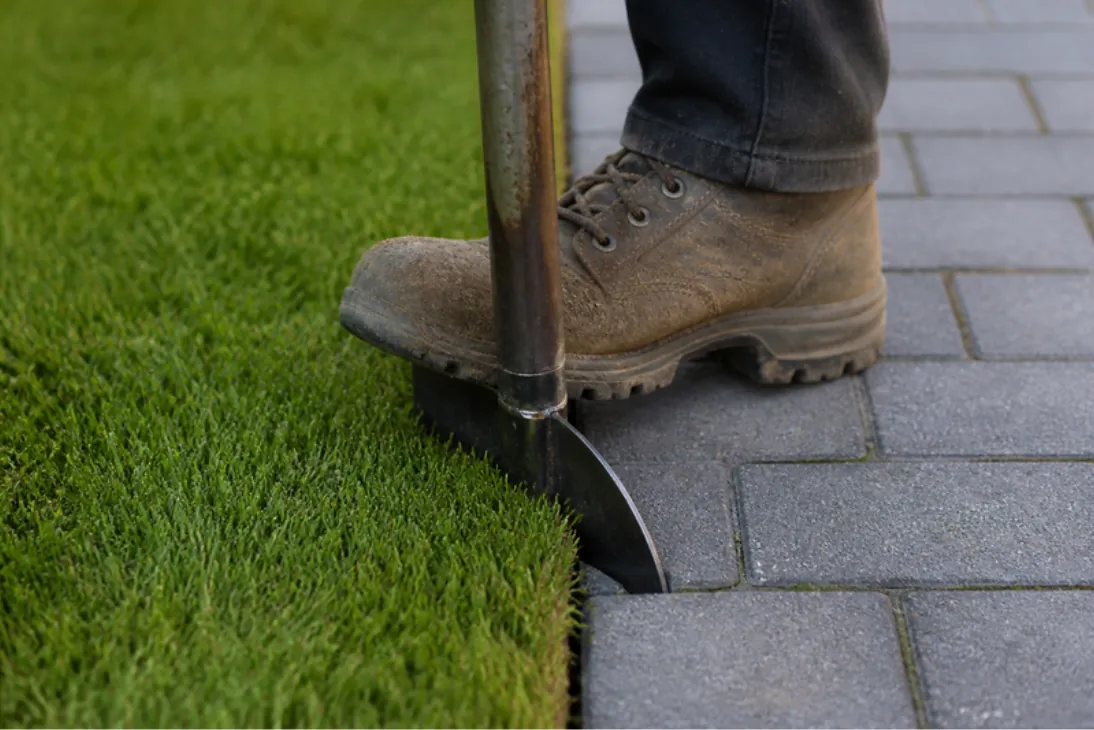
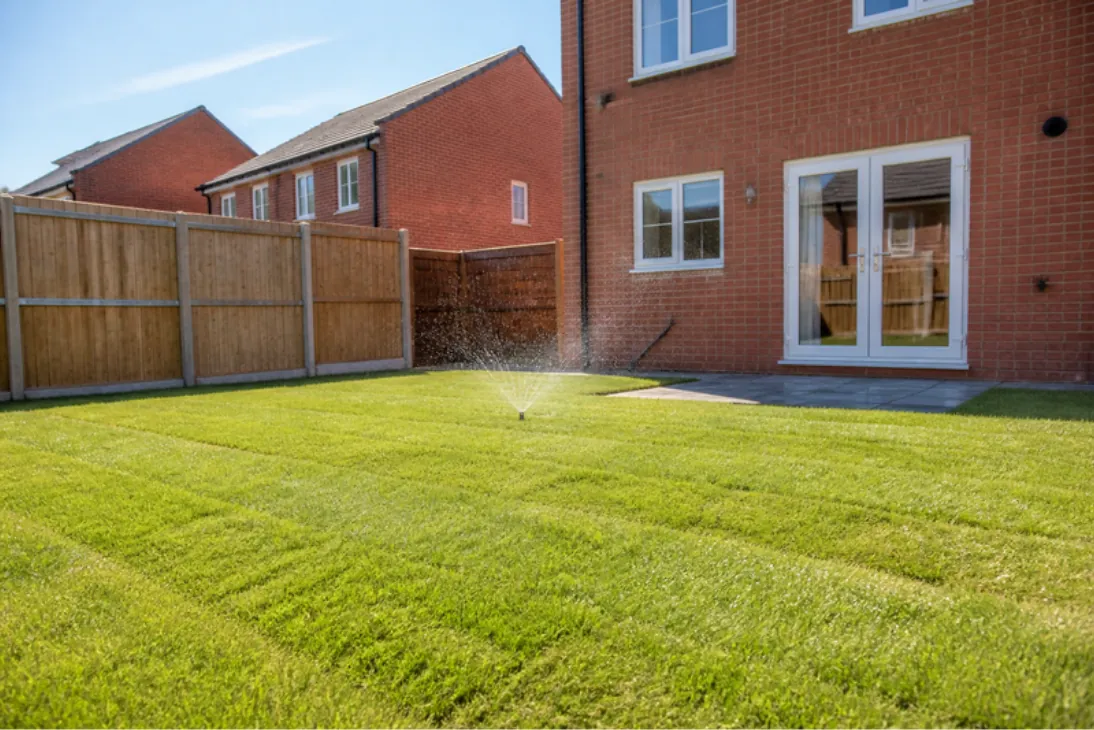
Swipe through. Every garden is different, but most Greater Manchester new-build plots need the same six things.
Common situations
Bare plot
The most common one. Usually needs the ground breaking up and some topsoil before turfing.
Patchy builder's turf
Turf laid straight onto compacted ground often yellows or lifts. We clear it and start again with the ground done properly.
Yes. Nothing is booked until you accept your quote and pay the deposit.
Usually, once the plot is handed over and we can get access. Add the plot number and estate name on the form if the address isn't live yet.
Light use after two to three weeks, once the roots have taken. We'll give you watering and first-mow notes on the day.